It was a dazzlingly bright day, as we got back on the highway. As the last six hours of our journey to Wadi Halfa the night before had been conducted in darkness, we only now noticed the dark hills on either side of the valley, or Wadi, gradually etched through the hills by the Nile. The hills had strange shapes; some of which look like naturally carved pyramids; others in black granite stood in contrast against the tan desert sand and cloudless sky.
We retraced our route south toward Khartoum for around 150 km just east of the Nile, until we saw a small green sign, I think it was for the village of Diabeen. We turned off the main highway and on to a gravel road, heading west toward the river. Tariq and I were filled with anticipation as we saw, through an opening between the hills, the palm trees lining the glistening water.We passed the village. A second green sign appeared, in Arabic and English,spelled in a way I haven’t seen, announcing our arrival in Sarkamatto.
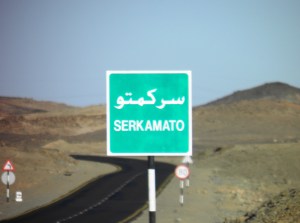
I’ve heard this word all of my life. My grandfather Abbas and grandmother Ruqaia were born in this village. Until she departed this world in 2013, probably around 100 years old (I say probably because no one actually wrote down the year or day she was born) she probably told 10,000 stories about life in Sarkamatto. I thought it was a myth; now we find ourselves walking through the very home of her childhood, and in fact the village lives on.
My grandfather Abbas was the son of a farmer, Hassan, a hard-working man of faith, who was the son of a farmer, Mohammed. I imagine that before the fajr prayer at dawn, Abbas rose in the dark to help his father till the soil, pull weeds, feed the oxen, tighten the ropes around the water wheel, just as Mohammed had helped his father Anno Hassan, and Anno Hassan had helped his father Yusuf (Joseph), and Yusuf had helped his father Daud (David) back in the nineteenth century, and so on over centuries.
And so they worked the alluvial soils on the mighty river winding down from Ethiopia, Eastern Sudan, Lake Victoria, Southern Sudan and Uganda, that started as a trickle in the hills of Rwanda. Together with the other villages up and down the Nile they drew life from this river, with respect, as it made its way to Egypt and on to the Mediterranean and to all that it touches.
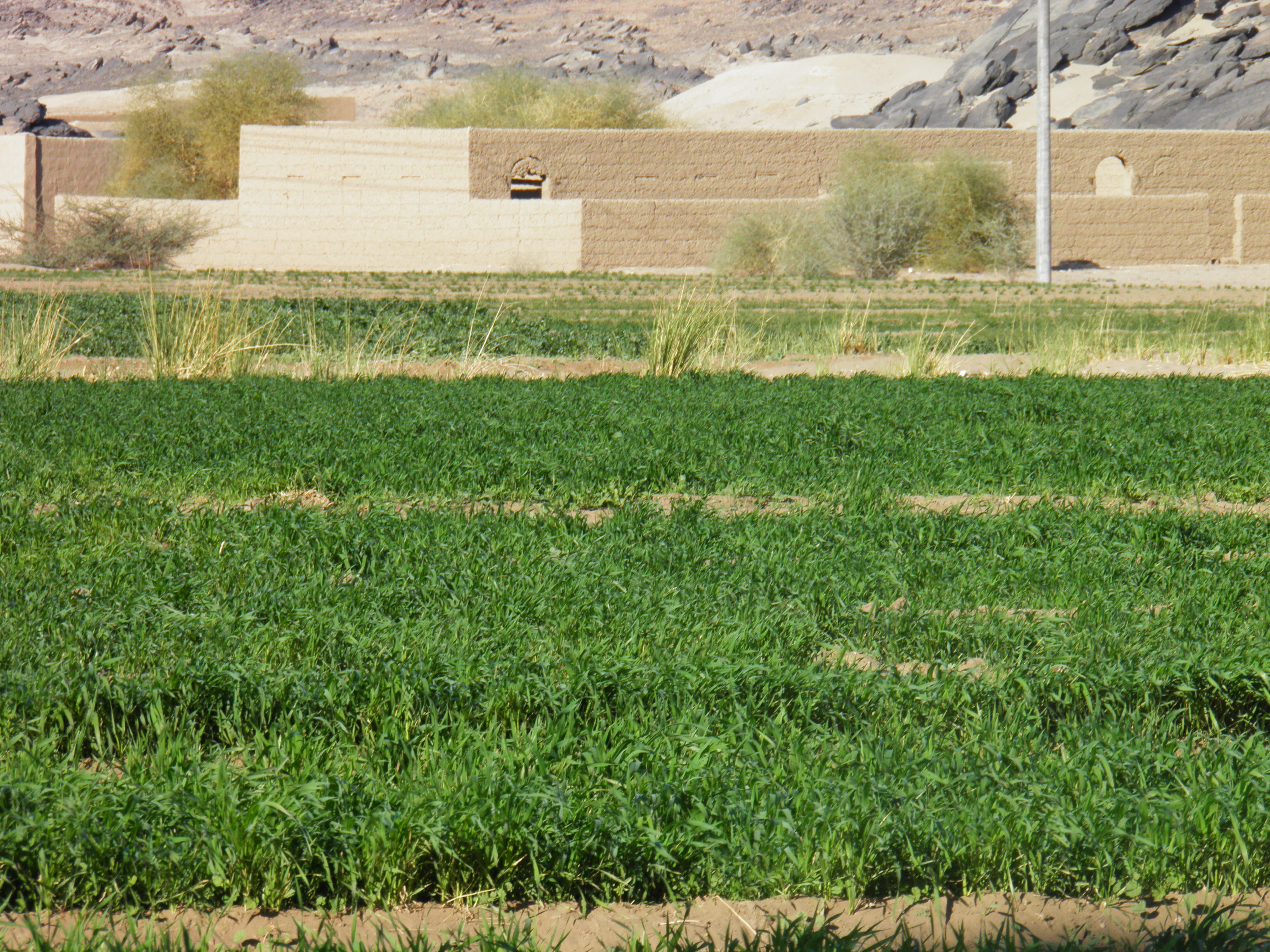
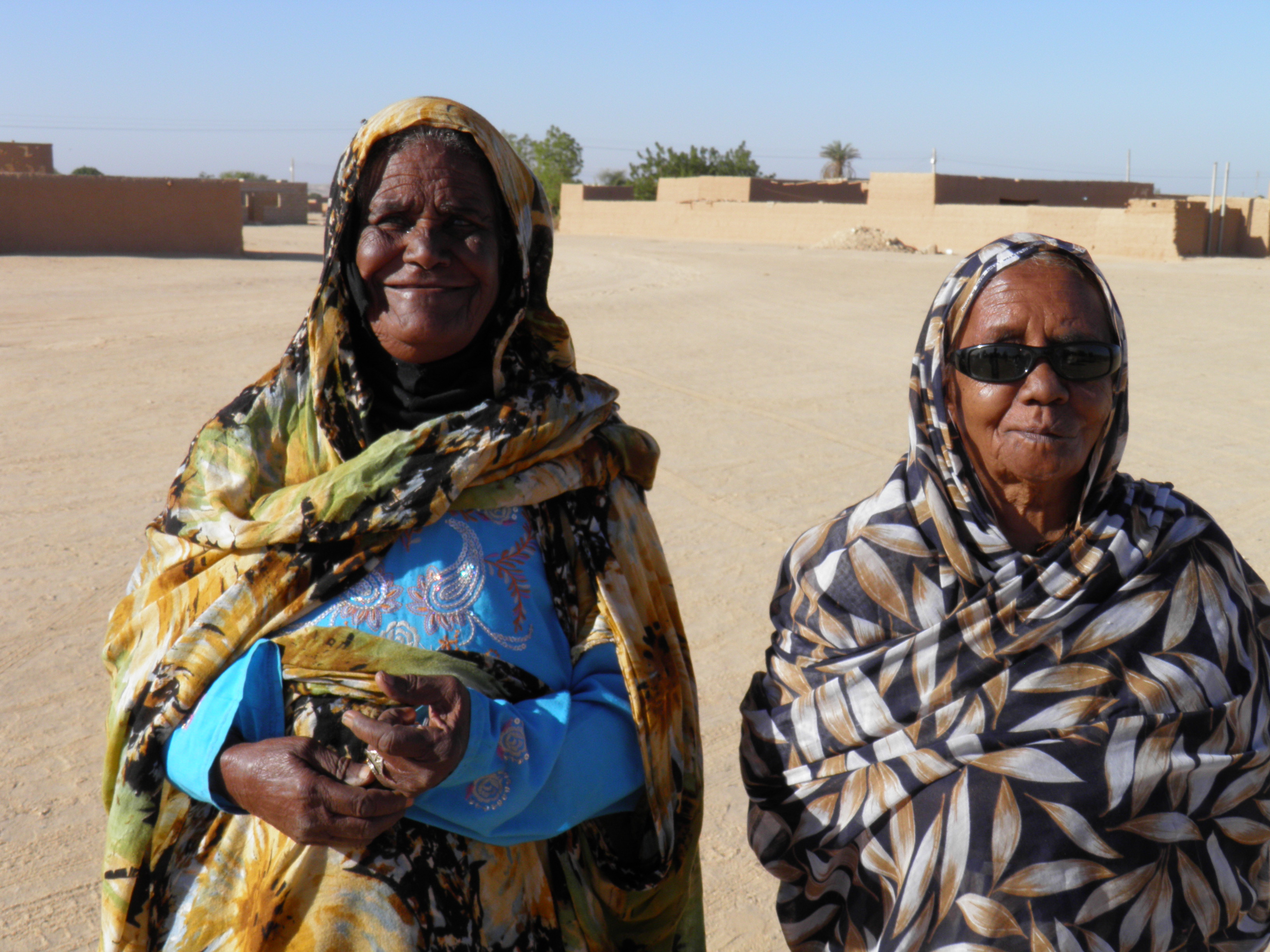
We pulled up and found two ladies walking, and they direct us further down the road. We find Gornas Abdu Ali Shelabi. We explained who we were and the purpose of our journey. He immediately recognized the names of our family, which brings him nearly to tears. He offers to show us around the village. What was in my mind cluster of small houses next to each other along the river was transformed, as in fact the houses were spread out, each having a large vegetable garden and were at some distance from the Nile. Closer to the river were the large working fields, planted in lubia beans, behind which were the palm groves, and then the Nile.
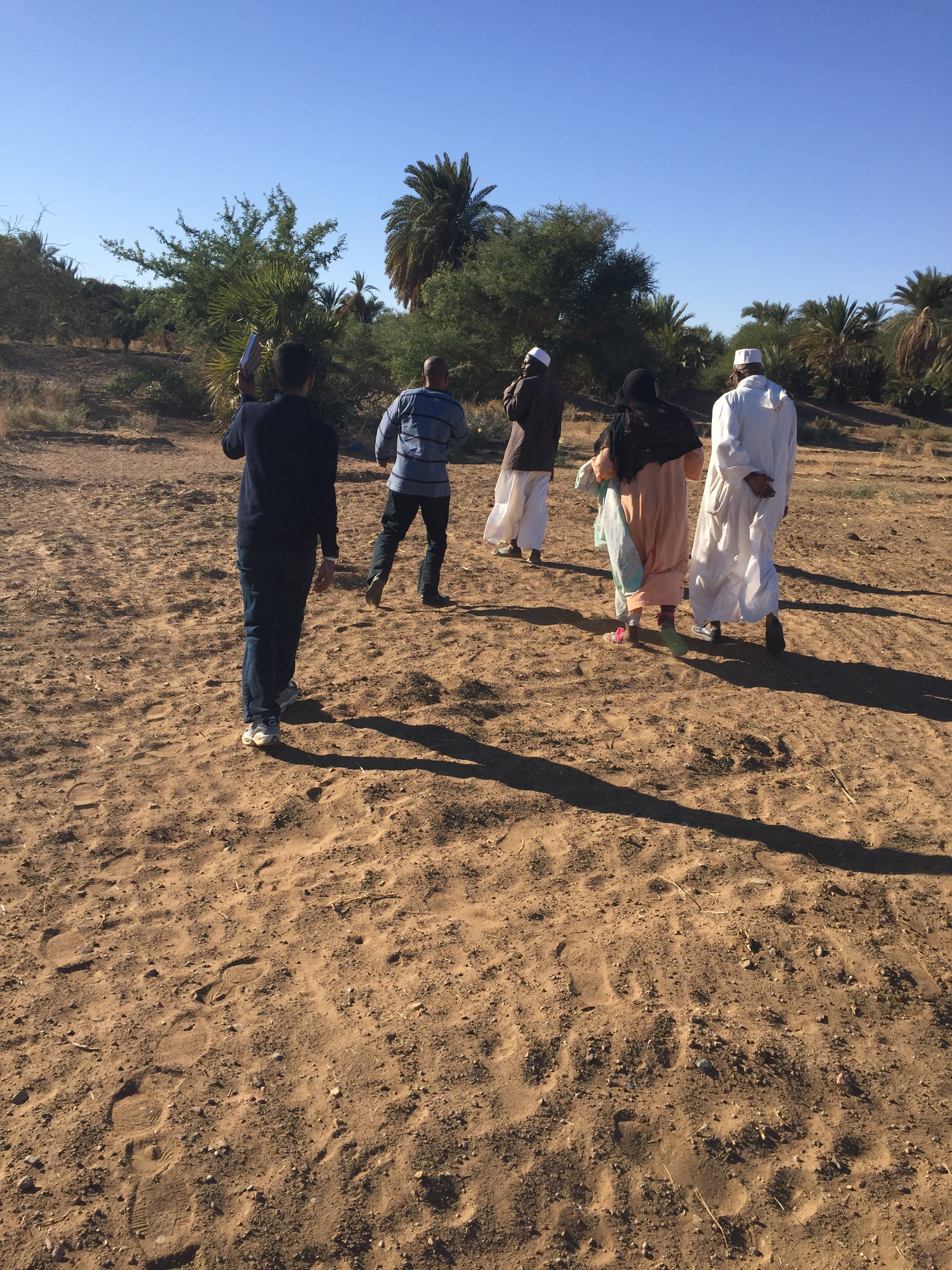
I want to see my grandparents’ house. We walk on, another 10 minutes or so. Tariq is followed by a donkey, probably amused to see Tariq holding a book over his head to create some shade.
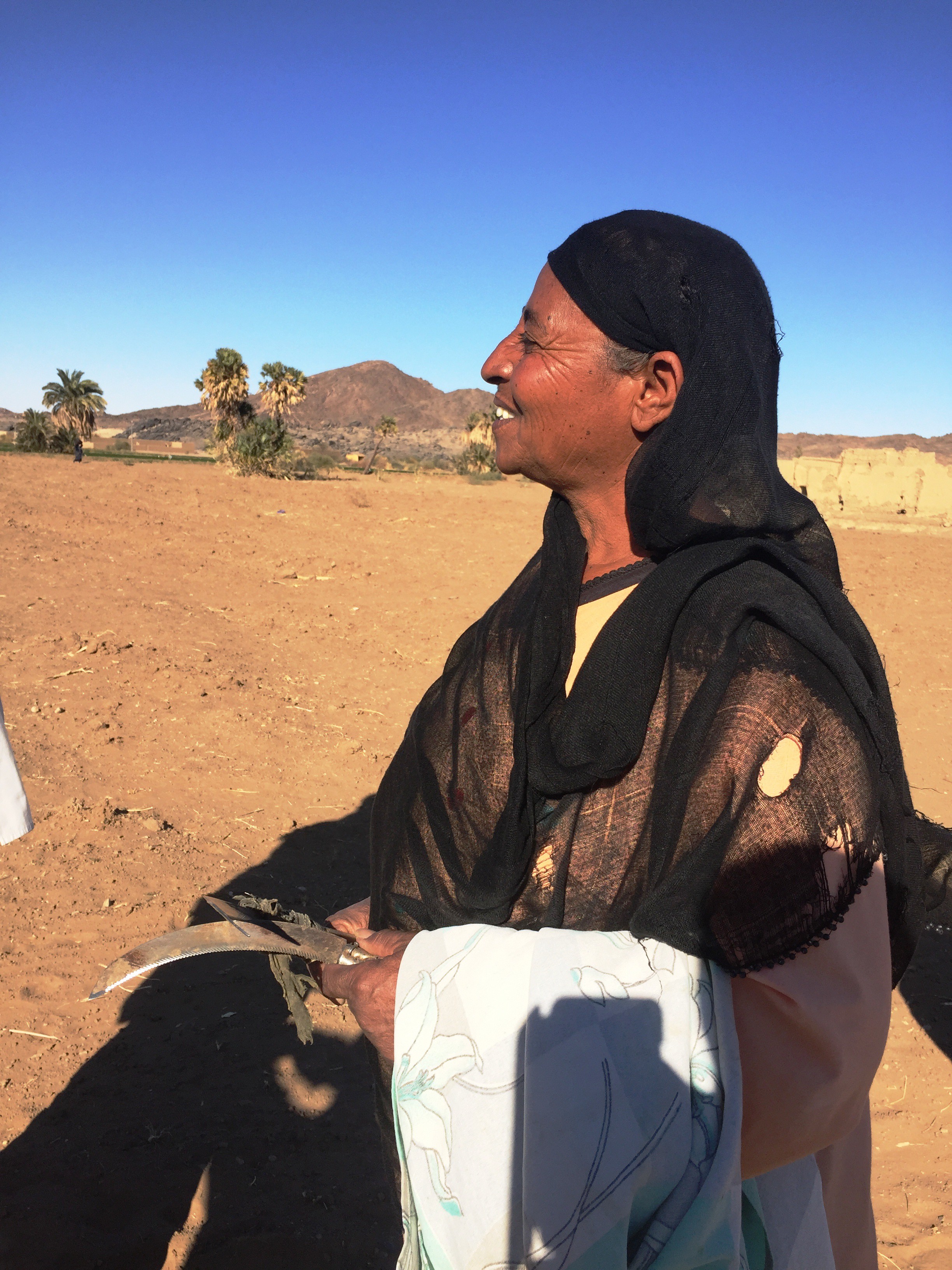
There we found Suad Ali Himmat, who was just heading out with her daughter to tend to the field. We asked her if she knew my grandparents. Immediately, she replied “Of course I knew them! How could I not know them? They were great, may God rest their souls. How are you, and how is your mother Loula and your brother and sister?” She has a bright smile, as the wind whips her scarf, and she holds the hand of her daughter as well as a small scythe for her tasks ahead. I am amazed by her vivid recollection of someone who hasn’t been to that village in nearly half a century.
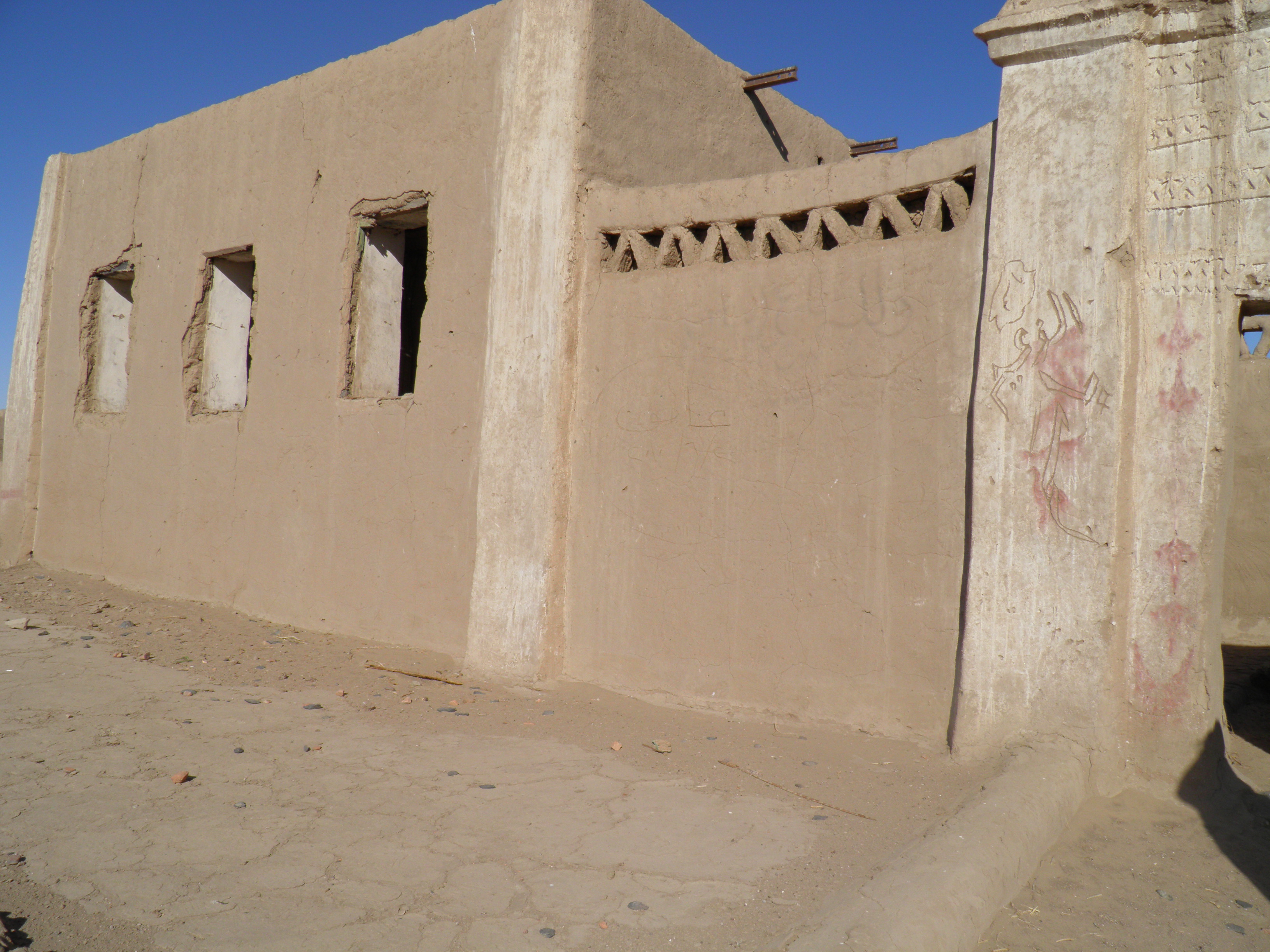
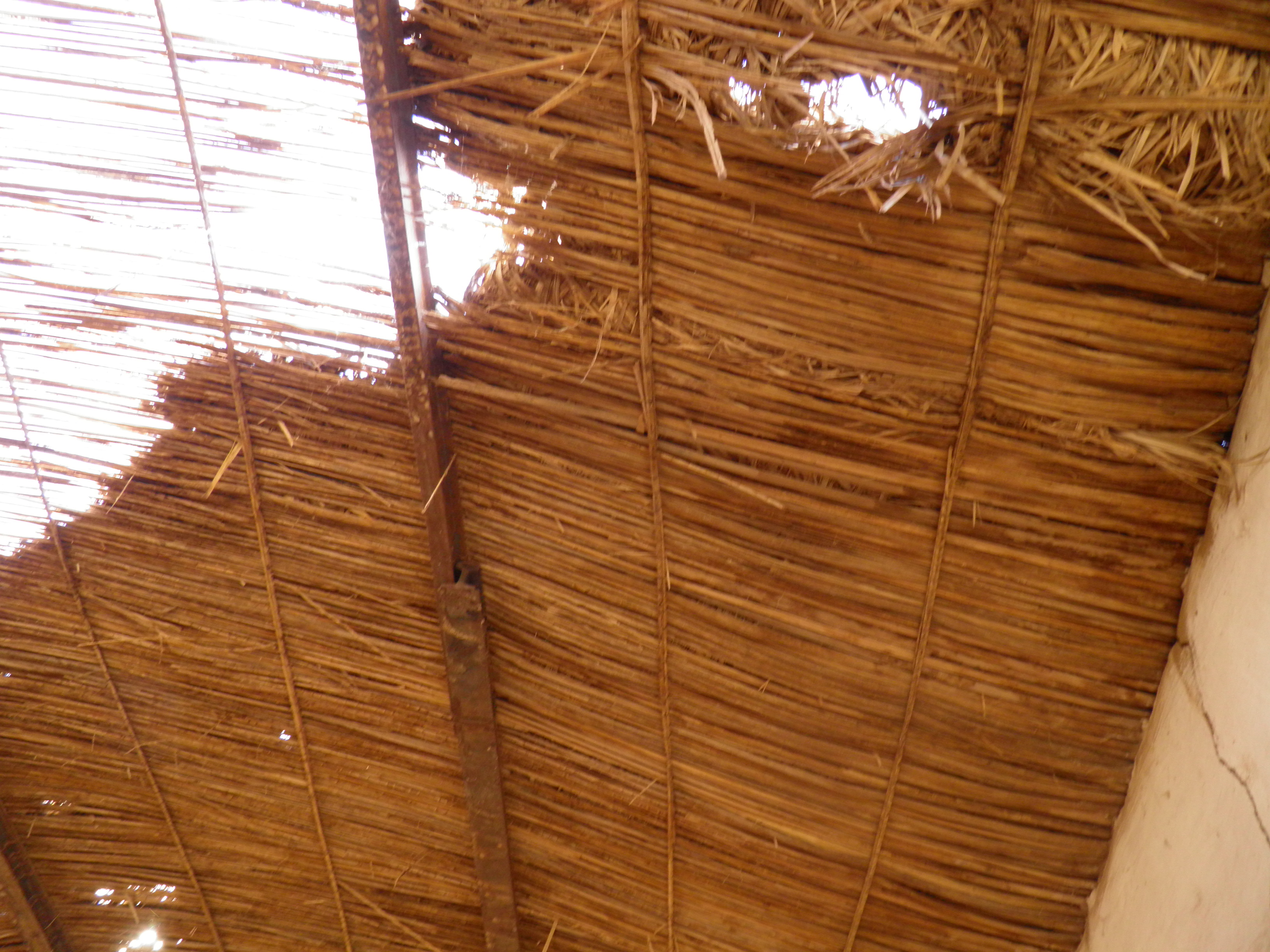
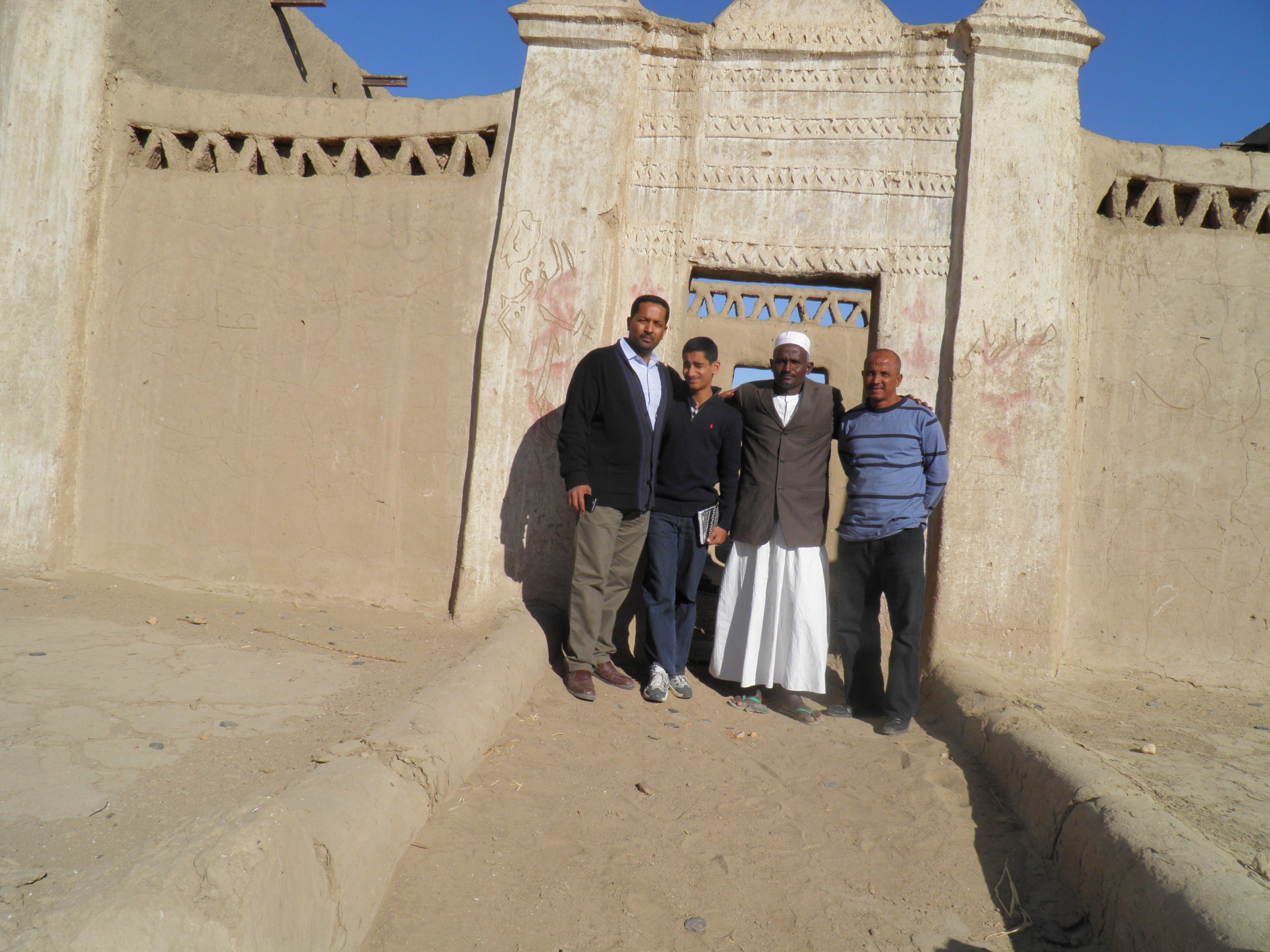
She points to a particular house, deteriorated but standing proudly. It has a grand entrance, three arches, and the walls all around the compound are carved with a series of triangle openings. The entrance way is carved, one could imagine flowers lining the entrance. All of the walls are intact, but there are no windows, and the plaster that covers the walls has faded away. The roof is in patches, exposing the beams and the thatch, but the structure of the house is intact. It was a large house; I had imagined my grandmother to have lived more modestly for some reason. After the entrance where visitors were greeted, there is a large courtyard. Opposite the courtyard is a series of rooms from left to right with windows facing inward. Tariq walks through an arched doorway and finds himself in the bathroom. We see what must have been several bedrooms. We step back outside, and take note of the view; looking out over the farms and toward the river.
I recall some of the stories Nena would tell us of her childhood in this village. As a child, she had explained, anyone could walk into anyone’s house and drink from the water aman horki cooled in the tall clay containers; eat of their food; get scolded by the parents of that home if need be. Everyone knew everyone else, so a mother could straighten out someone else’s kid and would expect another mother to do the same with hers if the need arose.
After school (for boys at the time), or a day on the farm, the kids would run through the village, play with a ball made from wrapped up rags and leaves, while the young ones played with the goats or puppies, or build little model houses from sticks and mud. All of them, boys, girls, young and old, almost always end up with a swim, korkid, in the river. Before doing so they would gather some eggs, Kombo, from someone’s yard, and bury them in the sand to cook while they swam and played. When they returned from the river, the eggs would be fully cooked and they would enjoy them.
She told us of her fall from climbing one of the date trees, and would complain of it whenever her shoulder gave her pain.
She told us stories of coming in to play one day, at the age of six, and being told that she was promised in marriage to the only husband she ever knew. They did not live together until she was older, when he took her to a life they built in old Cairo.
My thoughts return to the village. Gornas, Amir and Tariq are taking pictures in front of the house, and I join them. One of the pictures is the cover photo of this blog.
We follow the path out toward the river, through the cultivated field, through the grove of date palms, and to the edge of the water.
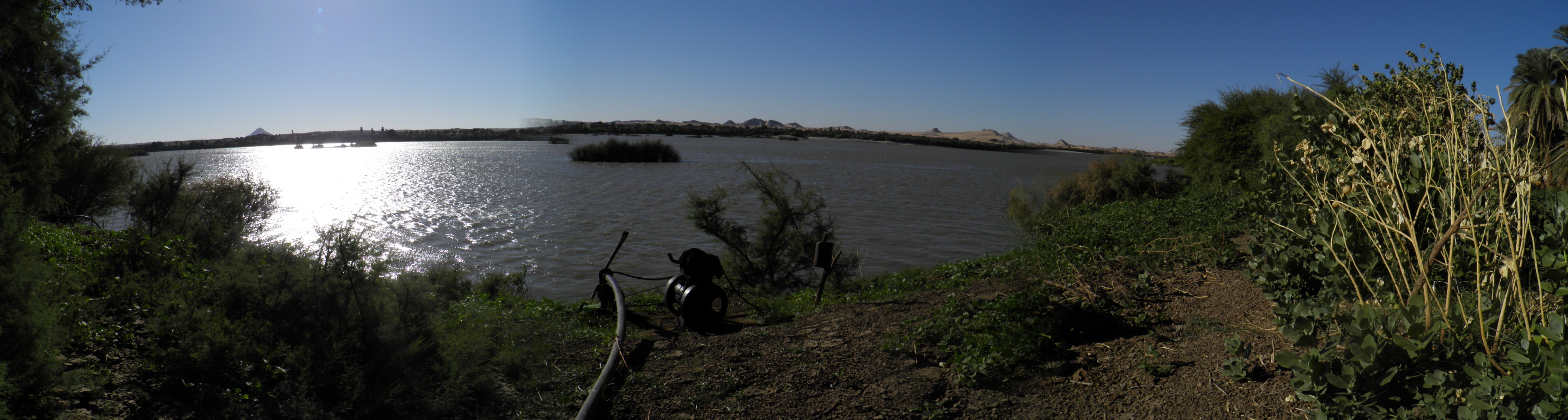


 After the flood
Beautiful captured memories of Nena’s life stories. Miss her and love that she blessed all of us with her amazing spirit.
LikeLike