Sudan

Nubia, Sudan

A Little Appreciation for Taharqa


No Comments


Those who have followed Sudan’s revolution closely have heard Alaa Salah’s rendition of Sudan’s revolution song, which calls out both the Kendaka, Sudan’s famous Warrior Queens, and Taharqa, the most famous of the Nubian Pharaohs.  I very much appreciate the return of the Kandaka to her rightful place in Sudan’s revolutionary history. I give thanks and praises to all of the Kandakas in my life. But my man Taharqa, mentioned in the same song, needs a little appreciation, too.

What if I told you one of the most militarily powerful Pharaohs in history was from the land that is modern-day Sudan? That he was black, Nubian, and saved Jerusalem from certain destruction? You would probably say that I was crazy and that the revolution has gotten to my head. Maybe it has, but let’s look at history.

The 25th Dynasty Nubian pharaohs united the Nile Valley from the Delta to Kush in modern-day Sudan and led a revival of the culture and its intellectual and artistic roots. The first was Piankhi, who ruled Kush from between 743 and 712 BC. He mobilized his famous Nubian archers and moved north through cataracts and defensive Egyptian forts, down the Nile. City after city, all the way to the Delta, his archers were victorious over the old oppressors or invaders from Libya or the Levant. He saw himself as on a mission to restore the true faith, ordering his soldiers to ritually cleanse themselves and seek the favor of the gods before each battle. This set the stage for the Nubian monarchs Shabaqo, Shebitqo and his cousin Taharqa, who ruled from 690 to 664 BC. Whereas Piankhi focused on restoring the cultural, spiritual and intellectual roots of an ancient civilization that had gone into decline, Taharqa spread the revitalized culture through military conquest.

Taharqa’s reign was the most glorious militarily, expanding Nubian influence from Libya in the West to Phoenicia in the East and north to the Mediterranean. It was through Taharqa’s conquests this that parts of the Levant, particularly Jerusalem, Palestine, and Lebanon, became protectorates of Nubia and Egypt. Taharqa maintained strong bonds between Egypt, Lebanon, and Palestine. The large Jewish community in lower Nubia, at Elephantine Island, may have played a role in this alliance with their brethren in Jerusalem.

Taharqa is the only Pharaoh to be mentioned by name in the Bible. As the Old Testament recounts, there were constant battles between Assyrians and Jerusalem. The Jewish King Hezekiah of Jerusalem came under attack from the Assyrian king Sennacherib who was advancing towards Tyre (in Lebanon) with vastly superior forces. He called his friend Taharqa. As explained in Isaiah 37 8-9, “Rabshakeh returned and found the King of Assyria warring against Libnah. Now Sennacherib received word that Taharqa, the King of Cush, was marching out to fight against him.” The Assyrian reminded Hezekiah of the fate of other kings that took on the Assyrians. Truth be told, the Assyrians were the most fearsome fighting force in the world at the time.

My man Taharqa had other ideas, and also had with him the Nubian archers, whose accuracy was legendary. Isaiah 37:36-37 explains that “the angel of the Lord went out and put to death 185,000 in the Assyrian camp. When the people arose the next morning, they were all corpses, and Sennacherib withdrew to his capital.” Nubian support proved decisive, and Sennacherib failed to capture Tyre, and Jerusalem was saved. Isaiah, King of Israel, gave gifts to the Taharqa in recognition of his support.

The historical record is that Taharqa, as protector of Jerusalem, reinforced Hezekiah against the Assyrians in the Battle of Eltekh. This particularly audacious battle that occurred when he was 20 years old, the favorite of his grandfather but not yet Pharoah. This was a decisive victory, but the fighting against the Assyrians created a potent enemy. The Assyrian king learned that the way to capture Jerusalem was to defeat Nubia.

Many years later Sennacherib’s son crossed the Sinai and attacked Taharqa’s troops with a massive number of soldiers at Memphis. Taharqa suffered a catastrophic defeat, including the capture of his wife and son. Taharqa was wounded five times but escaped and retreated. He later successfully regained Memphis, but was defeated a second time and finally fled to Napata, in Nubia, in 674 BC. The subsequent Assyrian invasion of Egypt ended the era of Nubian Pharaohs in Egypt. Nubians still ruled a vast area from Aswan to the fourth cataract.

So what are the lessons for today?

The first is about the fact that you did not know much of the above. Why? Because Sudanese have never written the narrative about their history, and few understand the importance of Nubia or Sudan. I just attended an exhibit about Egyptian Queens at National Geographic, and while it did an excellent job describing Nefertari, Tiye, and the like, it made no mention of the Nubian Warrior Queens – the Kandakas – just a little further south and in some cases more powerful. It is as if they didn’t exist.

Much of the region’s ancient history was written by Egyptologists. George Reisner, for example, excavated Kerma, the Gebel Barkal temples, and the royal pyramids of Kush. He was able to decipher the names and dates of the kings of Kush over 1,100 years from the 8th century BC to the 3rd century AD – a staggering achievement. He unlocked the study of Nubia. But Reisner himself could not escape the worldview that Nubia was a peripheral part of Egyptian culture rather than its own civilization. Many of these historians approached their work with the assumptions prevailing early in the 20th century, particularly about the agency and capability of black Africans to build a sophisticated civilization. Africa was at the time a source of slaves, in the European mind the heart of darkness, while at the same time Howard Carter was discovering the dazzling tomb of Tutankhamun and the beauty and complexity of ancient Egypt.

The world has changed. Stones tell no lies, the record is being set straight, and now, finally, Sudanese are shaping their own narrative.

The second lesson is best captured by TLC’s song, Don’t Go Chasing Waterfalls. Now, Taharqa was one hell of a warrior, and he had the baddest archers the world has ever seen. Jerusalem – as an alliance partner and a friend, was worth protecting. But taking on battles in the Levant, against an enemy with a more significant population, made Nubia a target. This, decades later, led to the end of the Nubian reunification of Nubia and Egypt, which was a successful revival of culture and the arts (if you visit Karnak you can see this first hand). It wasn’t internal corruption, bad harvests, or a political intrigue that ended Nubian rule. It was revenge – in the form of an invasion by an enemy whose anger was passed from one generation to the next over decades.

So then one might ask, why is Sudan now fighting in Yemen? Why is anyone fighting in Yemen? Sudan has problems of its own… please stick to the rivers and the streams that you’re used to.

Thawra!
Nubia, Sudan, Travel

The Hungarian Kendaka


No Comments

Ancient Nubia drew its power from its women.

Even when the King was male, as the Arab historian Ibn Abd al Zahir wrote, “it is the tradition that the Nubian kings be directed by women in affairs of the state.”  Leo Africanus records of his visit to Nubia “they are governed by women, and they call their Queen Gaua.” Ancient Nubia was a matrilineal society, with family identity and inheritance passed through mothers.

After what the scholars of Egypt called the late period, including the 25th and 26th Dynasties in which all of Egypt was reunited and the culture revived by Nubian pharaohs, Egypt regained its lost territory and the Nubians retreated further south.  Egyptian power eventually declined, and it came under the rule of a series of foreign rulers, including Persians, Greeks and Romans. Nubia at this time was known as the kingdom of Kush.

These foreign invaders knew that Kush was the source of Egypt’s gold, and as such made many attempts to invade and conquer this land.  They were repelled time and again.  In this era Nubia’s military reputation was earned both by its famous archers – one of the historical names of Nubia was “Ta Seti”, or “land of the bow” –  and by warrior queens known as Kendaka.  These queens not only held their ground; they would ever so often venture north and attack Egypt to put in check any ideas of military misadventures on the part of the foreign invaders.

One story has it that the Nubian Kendaka Amanitori, riding elephants at the head of impressive battle formations of the famous Nubian archers, intimidated Alexander the Great from venturing southward despite the known abundance of gold.

While little is known about Alexander’s misadventure, more is known about the attempts the Romans made to subjugate Nubia. The historian Strabo recorded that the Nubian Queen Amanishekhato attacked a Roman garrison in Aswan, defeated it, and moved further north to Thebes and defeated yet another Roman garrison.  According to Strabo the Queen “enslaved the inhabitants, and threw down the statues of Caesar.” She lopped off the head of one statue of Caesar and buried it under the floor of her temple at Meroe so that every visitor would walk over it. This head now resides in a museum in London.  The Romans would in fact later sign an agreement in which the Romans paid tribute to the Nubians in order stop attacking Egypt’s southern flank.

The Persian king Cambyses, the son of Cyrus the Great, also made the journey up the Nile, occupying but ultimately failing in his attempt to conquer Kush.

It is clear from these stories that Nubian women could hold their own. Centuries later, society has been transformed, but women still play a prominent role.  I think of modern Kendakas like my late grandmother whose century-long journey from the Nubian village to Cairo to California included not a day of rest, my mother who was managed to raise us after my father’s stroke, my other grandmother Miska who recovered from the early passing of my grandfather, and prominent women in the larger family who are or were fighters for social justice such as Souad Ibrahim Ahmed, Magda Mohamed Ahmed Ali, and countless others.

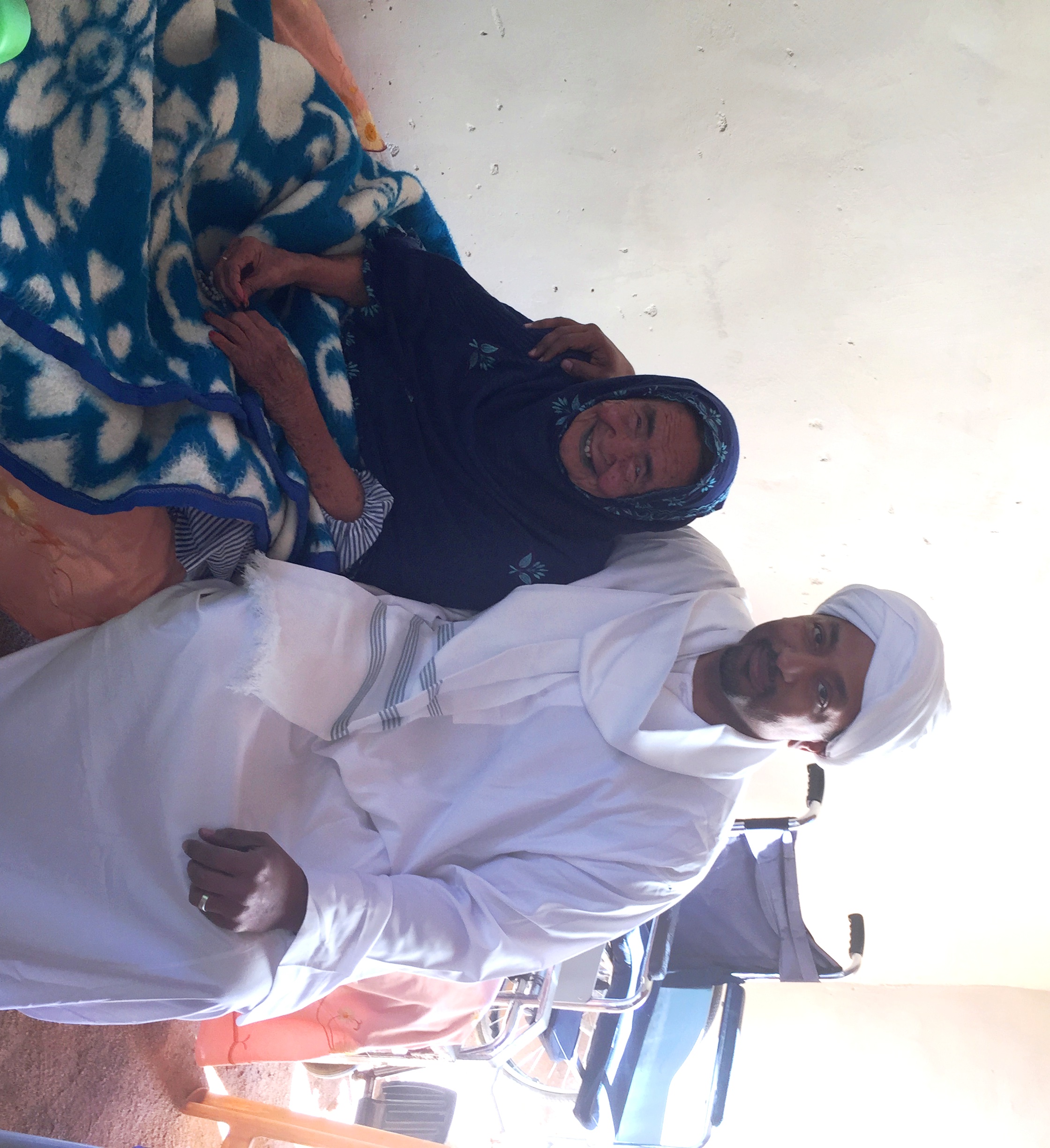
It is fair to say that in all societies, women are frequently the carriers of deep culture and social capital.  So we asked to meet older Nubian Kandaka who I was told had much of the history of Nubia before the flood in her memory. I was told her memory was still vivid. For this important meeting I put away my western clothing and wear my only formal Sudanese jellabia.

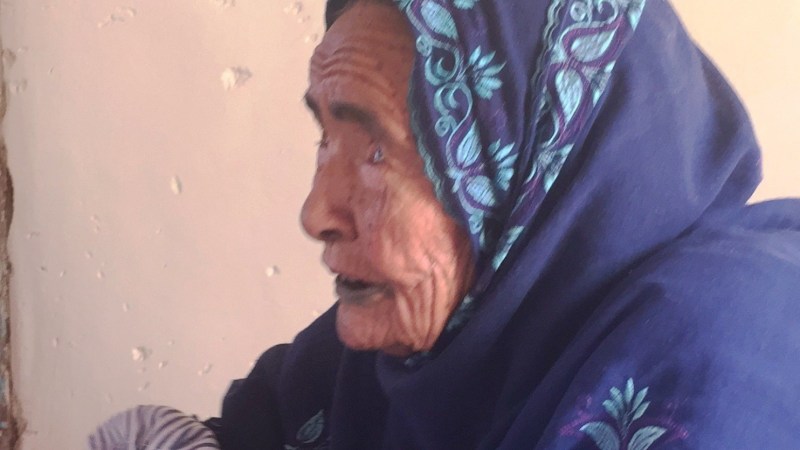
We found her in a house surrounded by friends, wearing a blue thob and chatting with lots of energy.  The biggest surprise to us was that she had blue eyes, and was part of the Magyarab tribe.  The Magyarab are the descendants of a Hungarian regiment of the Ottoman army that was brought in to hold Southern Egypt in 1517.  General Ibrahim, who was from Buda (the old part of Budapest), his five sons and many of his troops married local Nubian women and occupied an island within the Nile near Wadi Halfa.  For hundreds of years this tribe lived in relative isolation, retaining parts of the Hungarian language and customs, but forgotten by Hungary itself until it was discovered by Europeans in 1935.  In fact an offshoot of the Hungarian group was recently found in Congo with even more of the Hungarian language still intact.

This Hungarian Kendaka, peering at us with the blue eyes of her Hungarian forefathers, explains with pride about their society prior to the flood.  Life was wonderful; society was harmonious, and people were happy.  As the video shows, she speaks only in the Nubian language, but with some Arabic thrown in and yet more meaning from her hands gestures.  In one of the few Arabic words she uses, punctuated with her hands, she described the extent to which they were “Mabsooooot” or truly happy.

She explains about the various traditions, and what happened when news came of the coming flood.   She speaks about wedding ceremonies and births, and how the earth was formed and covered with a cloth to form a cradle for the newborn.   She explains that life was communal; multiple families would eat together as rather than in their individual homes, what was grown by one family was available to another.  She explains that Fakir Yusuf, a religious figure she holds with a great deal of respect, came to live among the Magaryab and built the first Mosque which became a key part of their community.

The flood meant that the Magyar island would be lost, and they needed to find new homes.  At this time many foreigners came to document the lifestyle of this offshoot of Hungarian society, and she charmingly depicts the motions of photography.  Small samples of earth were taken from various parts of Nubia, including Magyarab island, and she boasts that only the soil from her land was able to be replanted overseas.

This video would be great to have subtitled, if any Nubian speakers would like to help I would be grateful.

I come away from this encounter amazed that there was such a thing as a Magyarab tribe still intact, privileged to have had a chance to be learn from her, grateful to be able to share a little of her story, and honored to have been in the presence of a true Nubian Hungarian Kendaka.

A wonderful meeting

Nubia, Sudan, Travel

The Lost Water Wheel


No Comments

Emerging from the home of my mother’s parents and grandparents, we follow the path out toward the river, through the cultivated field, through the grove of date palms, and to the edge of the water.   On the way, I ask to see the water wheel.

The farms of the village were watered by a Saqia, the old water wheel that Hamza al Din used to sing about in his gravelly old voice.

http://www.nonesuch.com/albums/nubia-escalay-the-water-wheel-oud-music

The Eskale as it was called the local Rutana language, was powered by an ox, a gorondi, who turned a wooden wheel around its axis, which was geared to a vertical wheel, a goshor, that in its course dipped clay pots, Feshai, into Nile water that, having traveled from the mountains of Ethiopia or Rwanda, found its destiny in irrigating the small but intensively cultivated fields.  The rhythm of the Saqia, the oxen slowly turning the wooden wheel, the sound of the ropes on wood, the sound of clay pots entering the river, lifting, pouring out just enough water and not more, marked time in those villages, marked the day into two shifts of agricultural work, carved the week into work days, the year into the three seasons – the flood, summer and the bitter, cold winter.  And so in the valleys carved by the Nile grew date palms, wheat, oranges and okra (oyai) in abundance, which sustained a civilization, a people called Nubians, since before there were pharaohs or great men or anything called history.

For such a society to persist for seven millennia in such a confined space, it required deep reserves of what Buddhists might call Dhamma-vinaya, or Western philosophers might much more simply call ethics, as a basis for social harmony.   There was a balance between nature, on the one hand, and man’s desire to accumulate wealth on the other; a desire called “Al Takathur” in Islam.  In Nubia this was determined by the simple technology handed down the same way since before the Romans.  The Saqia and the ox turned at a speed that determined how much water could be drawn, and therefore how far away from the river the canals could stretch; and therefore how much land could be worked, and therefore how much each could accumulate and own.  Man’s animal spirits were held in check by the animal’s speed.

Courtesy of Nubian House in Abu Simbel, here is an example:

Water wheel in Nubian House, Abu Simbel

These natural limits forced Nubians to adopt social rules that emphasized cooperation while also maximizing the output from those small plots.  The water wheels and canals could not be built, and the scarce land could not be productive if every individual worked for themselves.  Success required some harmony.  Grandfather Abbas’ father Mohamed and the other families worked together to maintain the Saqia, and the sons and men of those families also helped with the farming.  The farmers that worked would receive their due for their labor, along with the investors that shared in its cost. As such a system which combined community ownership and individual effort emerged.  The Nubians figured a way to jointly invest and build assets, maintain records of the shares that belonged to each, and even trade these shares.  This way the village avoided the fate of many societies, the curse of inheritance dividing and fragmenting the land into smaller and smaller plots, until it could not be farmed productively and left the young generation little choice but to leave for want of a chance.

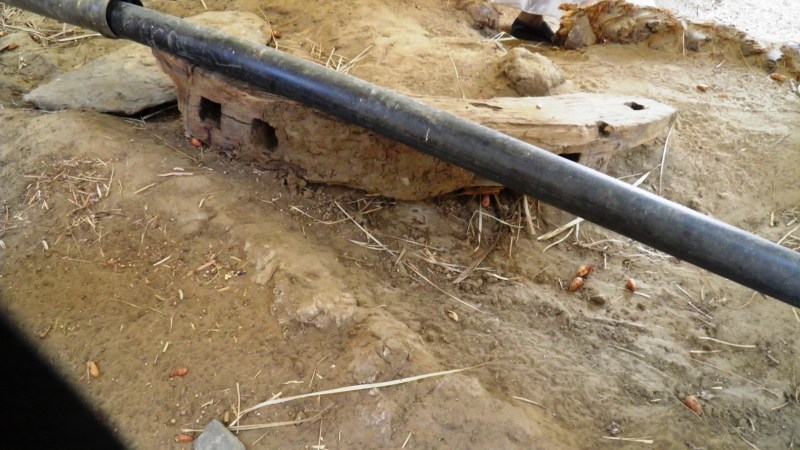
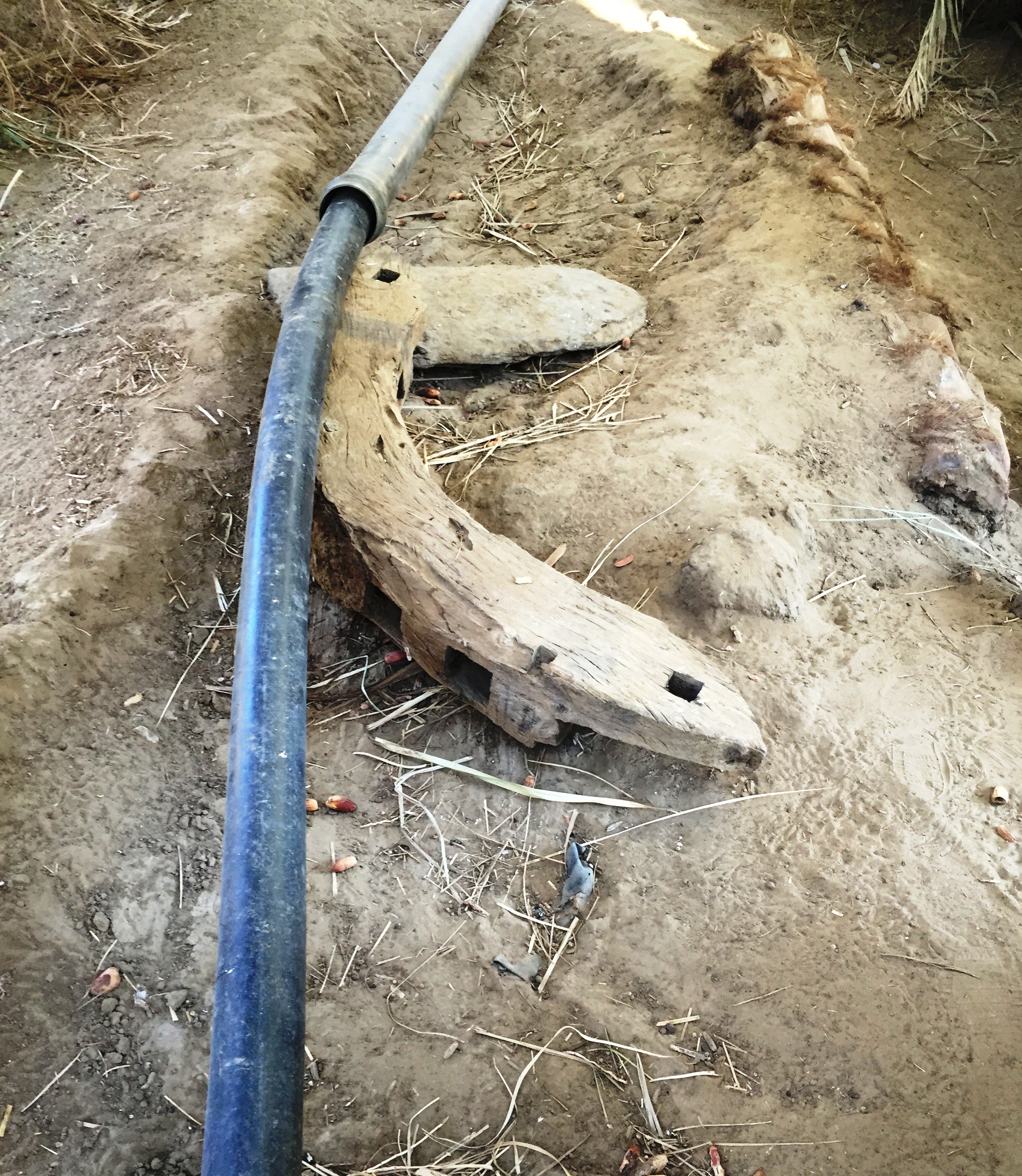
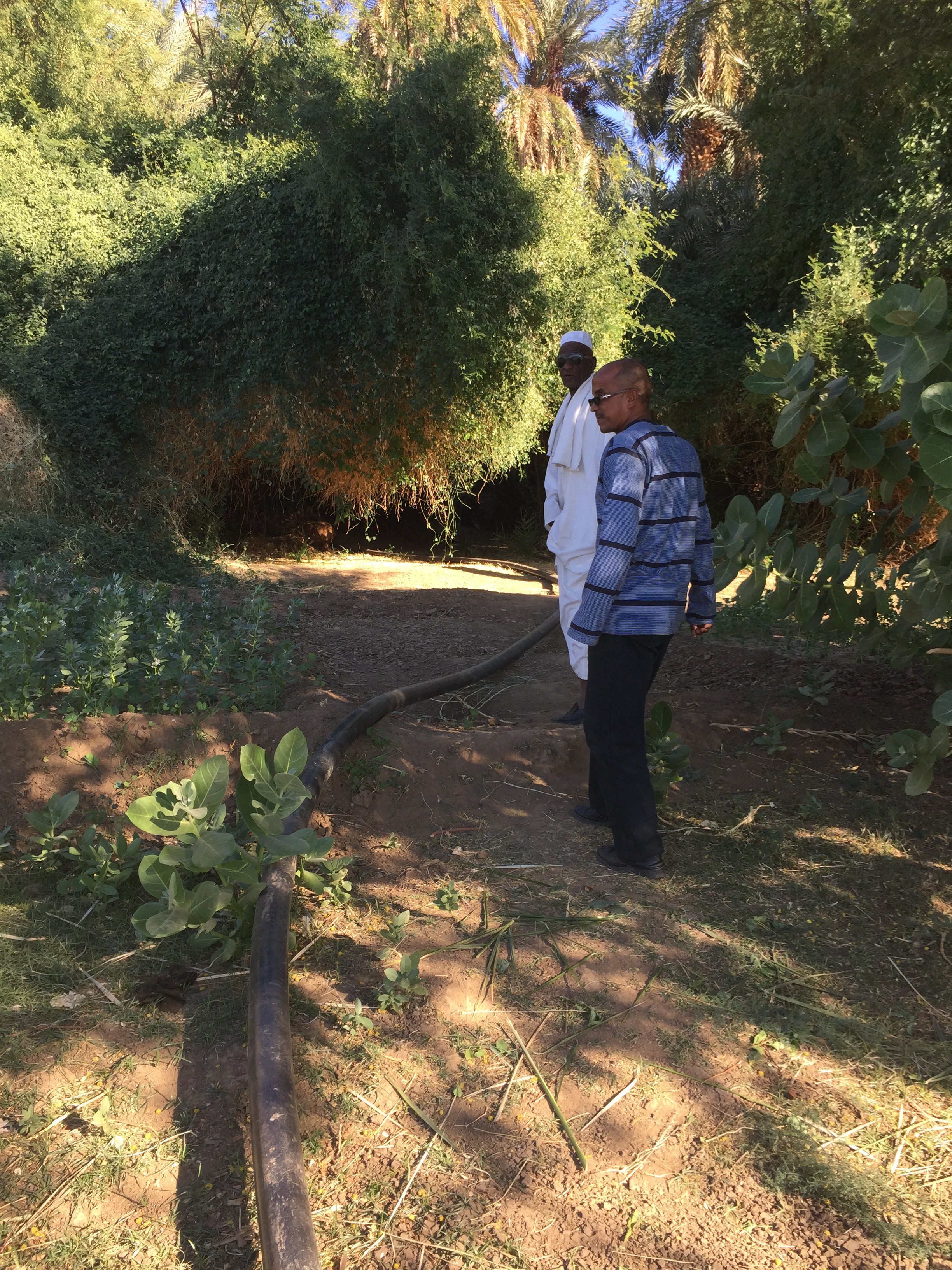
We walked toward the river, on a path between the fields. Through the grove they point to the place where the water wheel stood.  There is no water wheel.  Only a small remnant of the wheel remains intact, and this piece is being pressed down by a black water pipe that leads directly from the river to the field.

This wonderful technology was gone, and the remnant was now holding up a black pipe. The power of the ox has been replaced by the power of a diesel pump.  it brought water with ease; it surely allows more land to be cultivated, and saves time. But there is no beauty in this black pipe.

What remains of the Escalay
The last remnant of the water wheel, pressed down by a pipe from a diesel pump bringing water from the Nile

I reflect on this.

I wonder how much of our culture and identity was tied to the water wheel. We know culture as the set of beliefs, artistic expressions, knowledge, morals and customs that we acquire as a result of being part of a particular society; it is our collective inheritance. Part of the culture of the Nubians, since at least 200 BC and until very recent times, was this water wheel. But would many small changes like this eventually have eliminated what we knew of the culture of Nubia even without the high dam?

IMG_0527

I cannot blame anyone for wanting to use modern technology.  Nubian men often worked away from their village and left the farming to the families left behind, led by their wives.  It was difficult work.  A diesel pump would make life easier.

But just as this imported technology displaced something genius and home grown, does this imply that the ideas, culture and identity would also be displaced, or would it have been integrated and absorbed into a new Nubian culture?  Has it eliminated some of what bound Nubians to each other; the need for collective effort to maintain the canals and the water wheel?  I don’t imagine songs will ever be written about this black pipe or the beating sound of the diesel pump.

We make some more visits, see stop by a house where another family recalls my older brother Semir who had visited this village in the late 1950s or early 1960s.  We enjoy a wonderful tea and the typically Nubian dried sweetened bread, gargosh, which is taken with tea.  We enjoy a conversation, a recollection of old times.  The people are here for each other.

OLYMPUS DIGITAL CAMERA

Through these changes I still see the outlines of a beautiful culture, a village called Serkametto where 50 years later one can visit and ask about their deceased ancestors, and still find their friends walking around and recalling them fondly.

There is change, but there is continuity.

Kerma, Nubia, Sudan

500 Miles, and a 5,000 year detour: Kerma


3 Comments

African cities, particularly in countries touched by conflict, tend to sprawl as waves of the innocent, dislocated and displaced seek refuge along its borders or new lives within it.  As we approach Khartoum, it is hard to tell if we’re actually in the city, whose outskirts have been growing for decades, until we’re in the middle of the chaotic traffic, fast food places, neon lights, and see planes descending into one of the world’s few downtown airports.

Having been to the place to which Nubians were resettled, our aim is to see the land we’ve heard about since childhood but never seen, the place where our grandmother used to swim with her friends in the Nile as her mother and father worked the land.  I’ve seen pictures of the top of the minaret above the waterline, holding its head above water for a last breath before succumbing to the flood.  We’ve spoken to those who took those fateful trains to their new land.  But we’ve never walked on the land or breathed the air from which they were removed.

Wadi Halfa is 580 miles to the north.  Khatir wisely decides to change the tires, oil, and brakes.  We adjust our plans and join Wagdi for breakfast before heading out.  He also sends with us food for the journey for which we are grateful and later enjoy.  Tariq stocks up on Doritos, which amazingly are found in Khartoum.

As we head north from Khartoum, we are immediately are immersed in the traffic that is in part a legacy of the British, who thought it best to lay out Khartoum in the form of Union Jack.  We cross a bridge near where the Blue Nile, which has descended from the mountains of Ethiopia, meets the White Nile which has meandered slowly up from Lake Victoria through South Sudan.  The two rivers marry here and begin a journey as one to give life to Northern Sudan and Egypt.  We head out through Omdurman, the center of so much of Sudan’s history, including the headquarters of the descendants of the Mahdi who led a nationalist uprising against Egyptian and British rule in the 19th century.

As we emerge from Omdurman it is already past noon.  We take guesses as to the time we will actually arrive at the Wadi Halfa milestone 924 kilometers to the north.  Tariq, more of a realist than I, guesses 20 hours to my 14.  Amir, who guesses 10 will be the closest.

Whereas the road to New Halfa went through farms and villages, the scenery on the road to Nubia is dramatic in its stark emptiness.  The black asphalt road stretches out in front of us, straight as an arrow.  The sun beats down intensely.   The milestones alternate, left and right, and count out each kilometer like giant footsteps. There are no herds of anything except high voltage power lines and mobile phone towers powered by the sun.

Meroe pyramidDue to the late departure from Khartoum we decide not to stop at Meroe, the site of 64 Sudanese pyramids I visited maybe five years ago along with Ibrahim Elbedawi, Musallam, and Alan Gelb in the photo.  But I’m determined to see Kerma, one of the world’s earliest organized cities which flourished from around 2,500 BC.  Kerma is one of the three capitals of the series of Nubian kingdoms that vied for control of the Nile Valley.

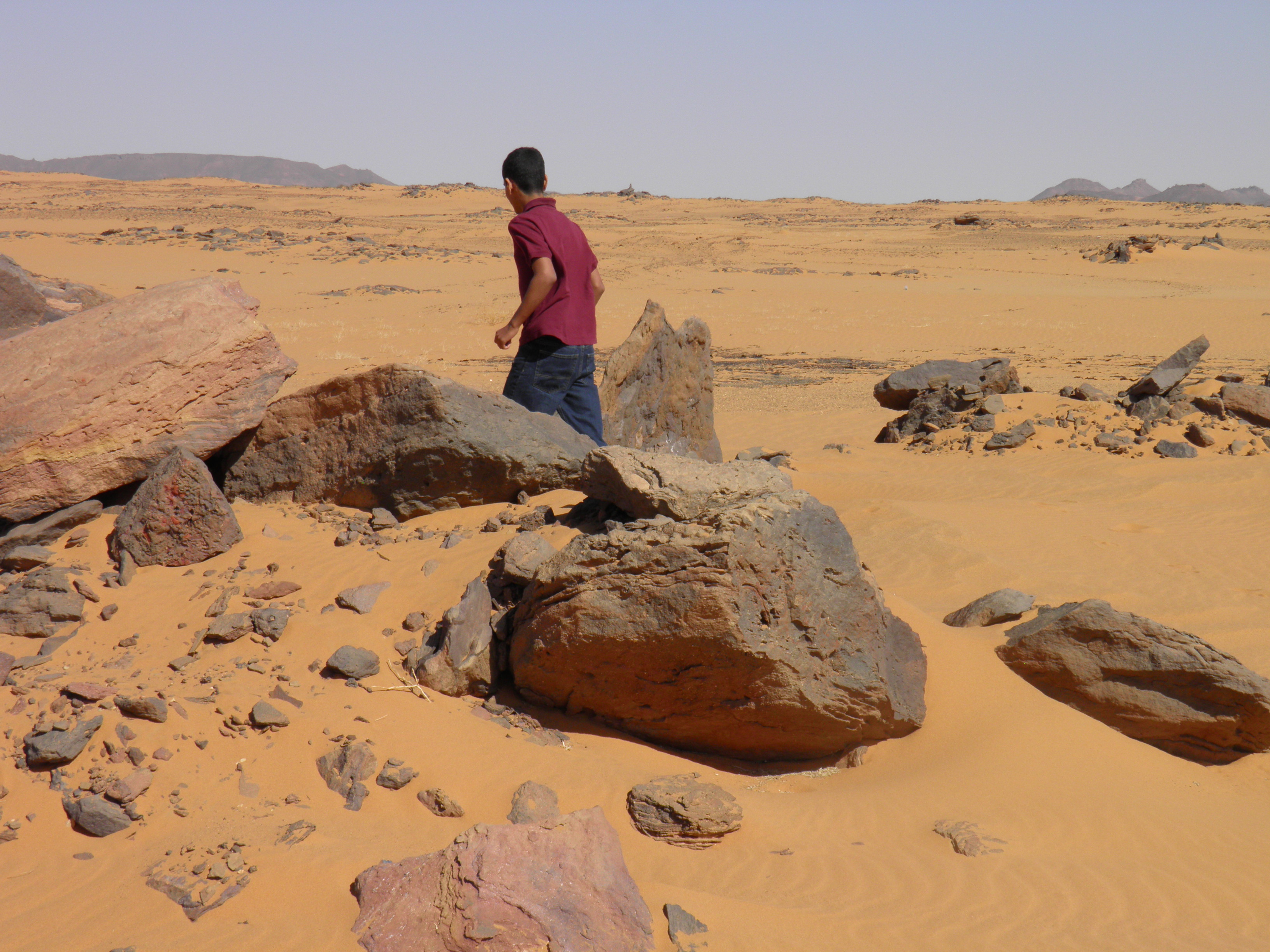
Tariq asks for a “nature break” and the rest of us, who had been holding back, readily agree. We step out into the wilderness.  As far as the eye can see, it is the tan sand of the Nubian desert; a barren landscape with dramatic rock formations jutting into the sky.  The wind-whipped air is pure, clean and dry.

Nubian desert nature call

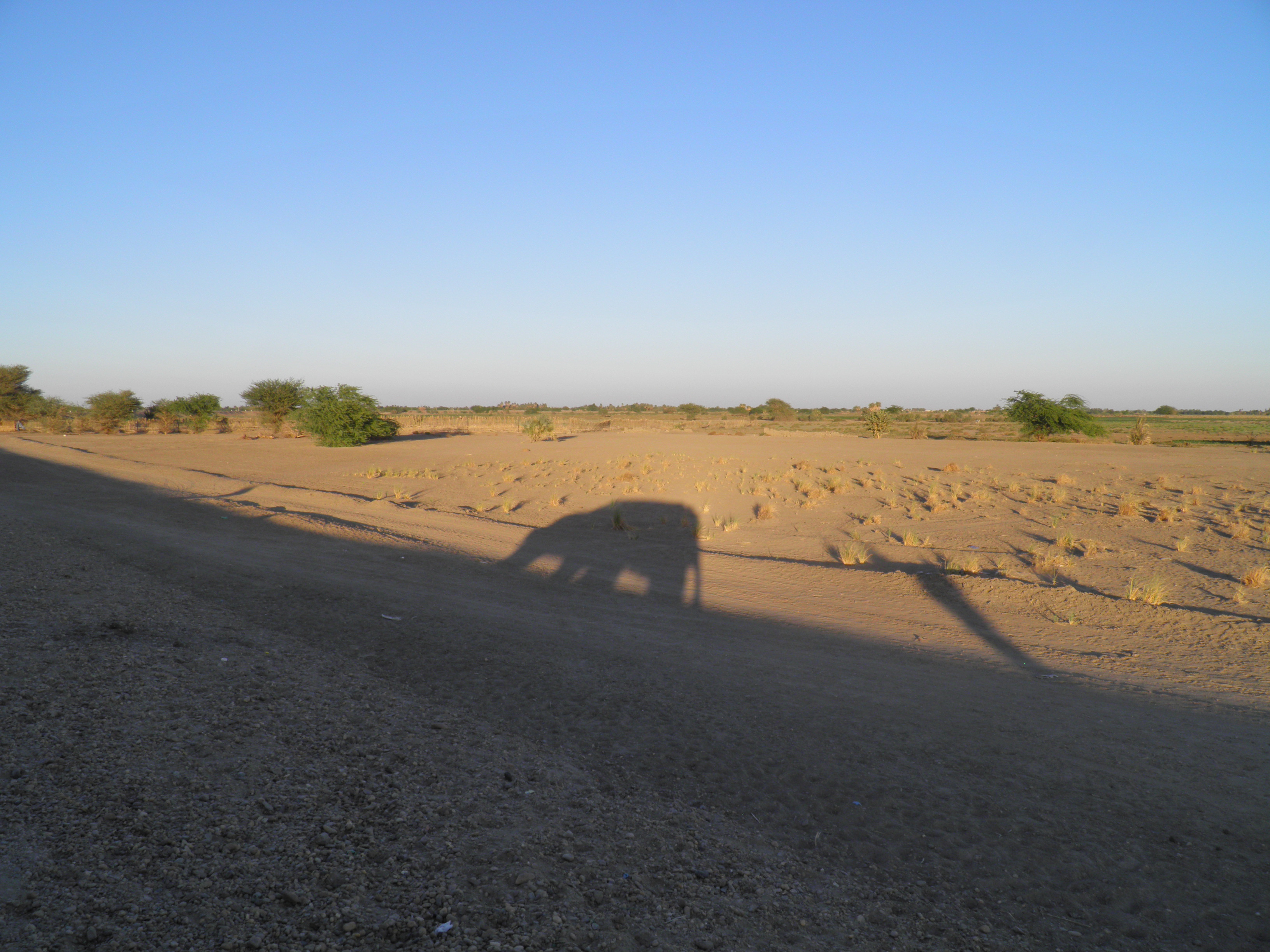
As I return to the car, the shadow is of an elephant.

We are passed by a series of trucks carrying camels in the back.  For centuries this route has been taken by camel traders who ride for forty days to sell their livestock in Egypt.  Now they ride in an open truck, appearing to enjoy the journey, staring off into the distance. Two are clearly arguing over space.Elephant shadows

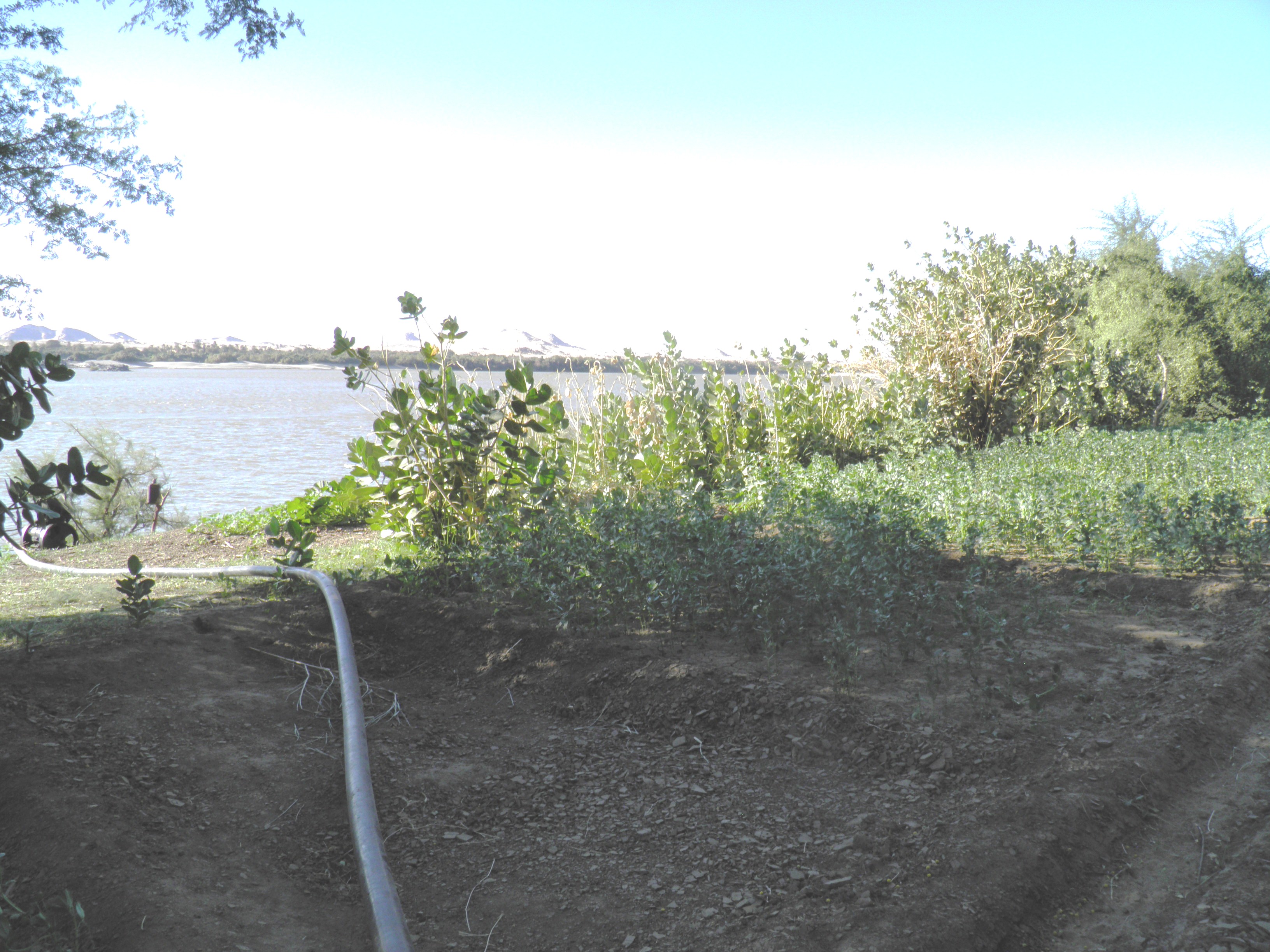
After cutting through the desert for hours, we see that the road has approached the river.  This is evident because of the groves of date palms that grow on its banks stand in sharp contrast to the surrounding desert.  Where there is water, there is life.

We stop to refuel and find a group of German tourists in a convoy of land cruisers who are touring the archaeological sites of Northern Sudan.  They have stopped to have tea in a roadside open air café.  Some of the Germans are having an animated conversation with the waiters.  I have some sweet aromatic coffee, spicy with the taste of cardamom and clove.

We pull off the main road into a village to start asking directions.  Amir, who has joined us from New Halfa, starts asking directions in the Nubian language, and there is a connection.  Each villager points us further down the road, deeper into the village toward the museum.  We see kids going home from school, others playing soccer, neighbors on their doorstops talking to one another.

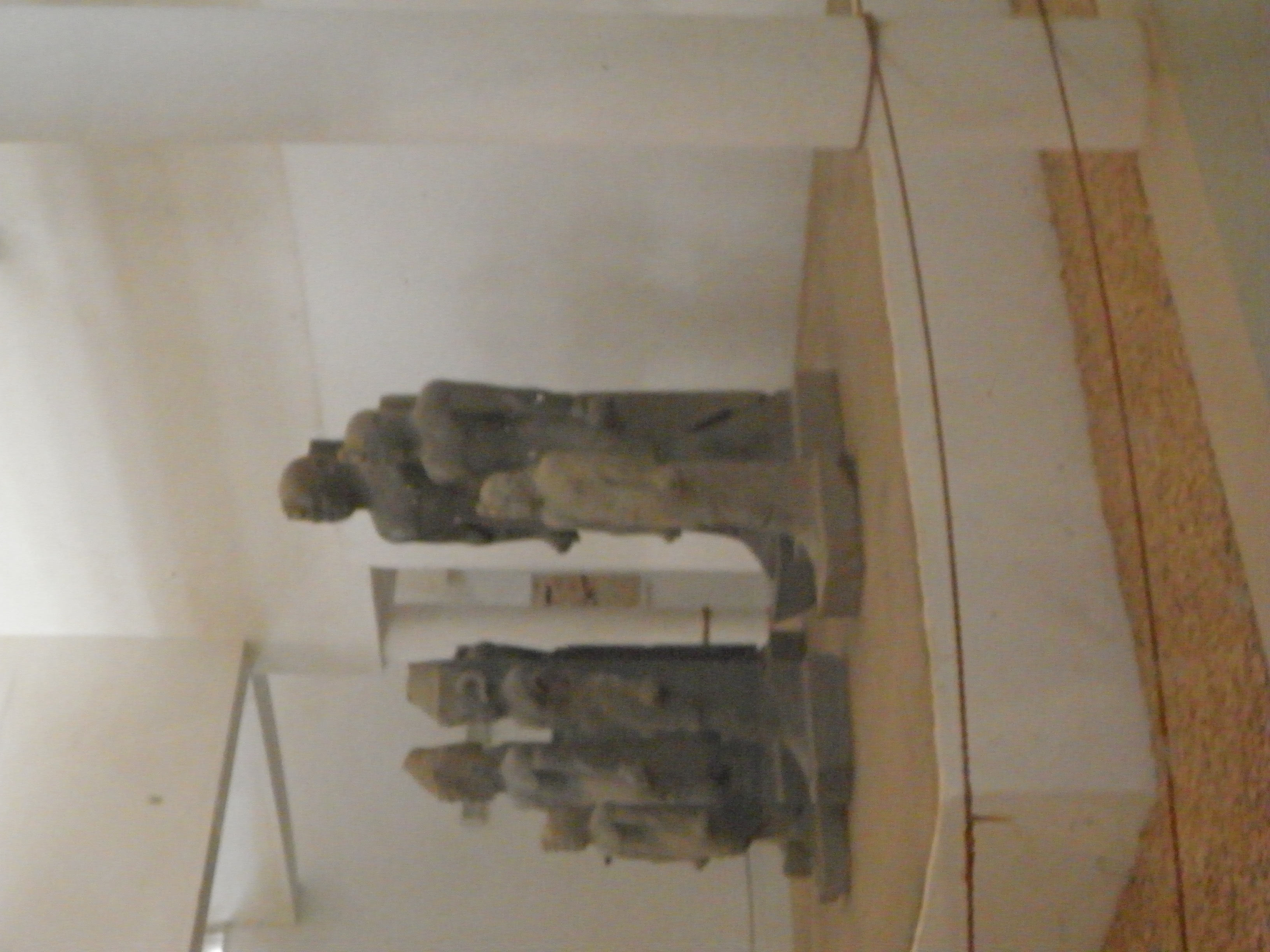
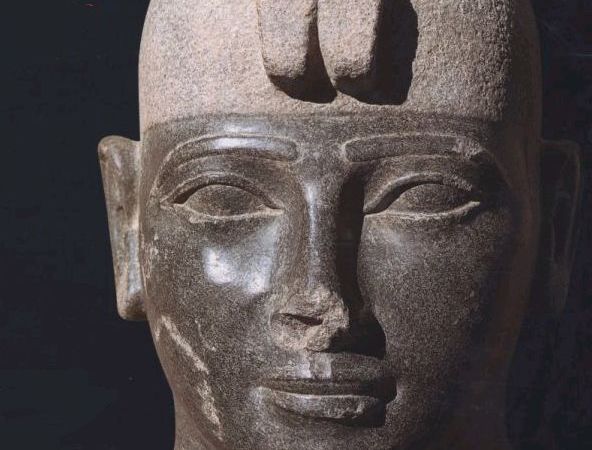
???????????????????????????????Finally, we arrive at the museum at Kerma.  It is near sunset, and the guards are closing the museum and getting ready for the evening prayer.  The doors are locked, but through the glass we see the statues found in 2003 on this site by a Swiss archaeological team led by Charles Bonnet; statues of the most famous kings of Nubia, including those of the 25th dynasty Nubians that conquered Egypt and became Nubian Pharaohs.   But the museum is not the main attraction, it is the site itself.

Kerma is remarkable.  It was the capital of ancient Nubia, known in various periods as Napata or Kush from 2500 to 1500 BC.  As early as the sixth dynasty (2,300-2,400 BC) there were diplomatic, cultural and economic relations between the ancient Egyptian capital city of Memphis, near modern Cairo, and Kerma,

It was a trading city, with homes for the wealthy traders and dignitaries that helped move the product north, east and west.    Bonnet’s team found hundreds of seals that were remnants of concluded trade deals.

Over the next millennium, Kush’s power grew along with that of Memphis, a co-existence that included periods of cooperation, rivalry and conflict.  Ancient Egypt and Kush vied for supremacy for millennia; Kush grew more powerful when Egypt was weakened by invaders from the north; Kush in turn grew weaker through its conflicts with neighbors to the south.

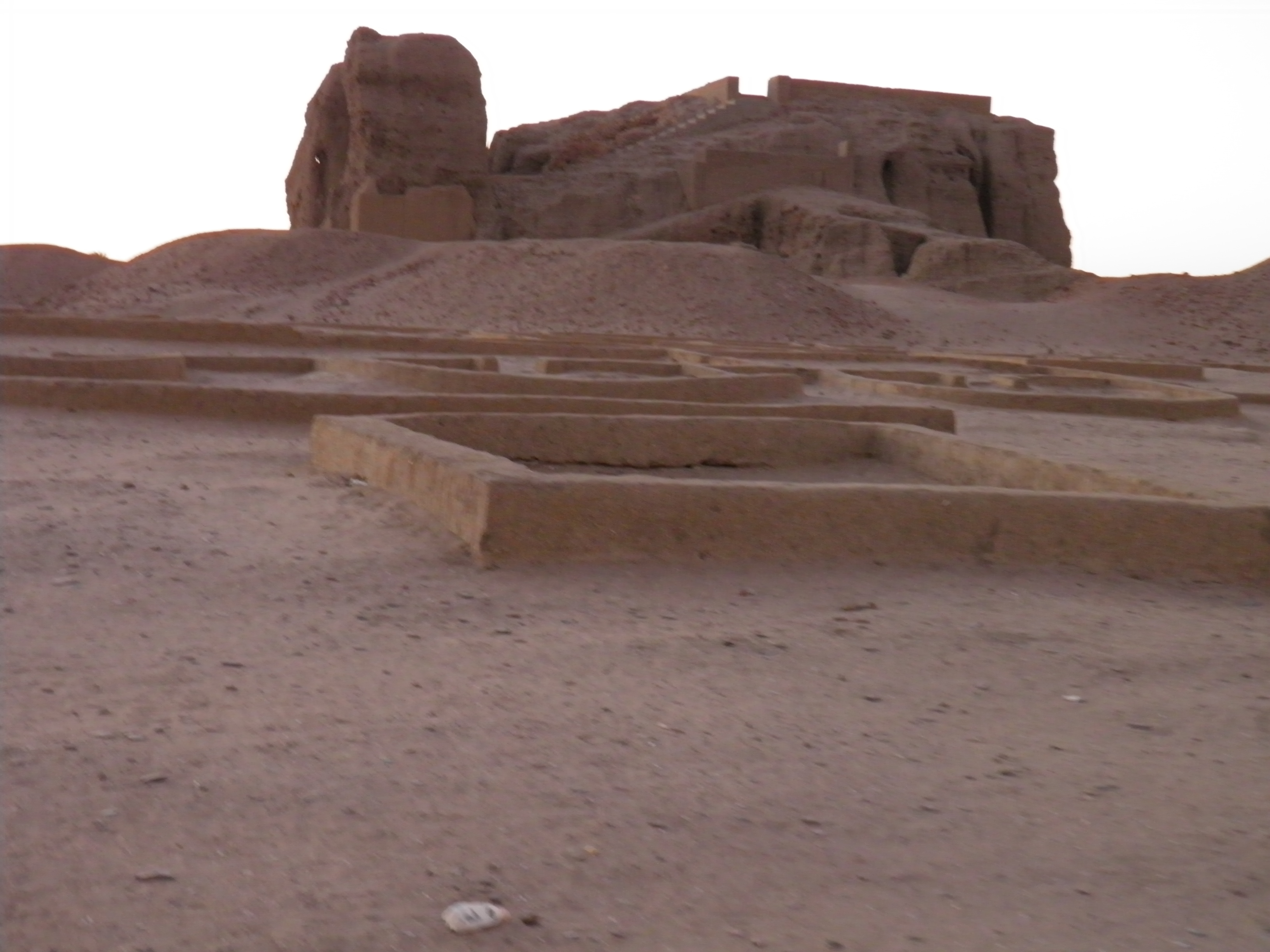
This site itself, Kerma town, is just over the fence, now closed.

Kerma town

Deeply disappointed, we explain that we have been driving for seven hours to see this site; I explain that I would be happy even to look over the wall and taking a photograph, as you see above.  With no argument at all, the guard casually mentions that the door 50 meters to the west is still open.

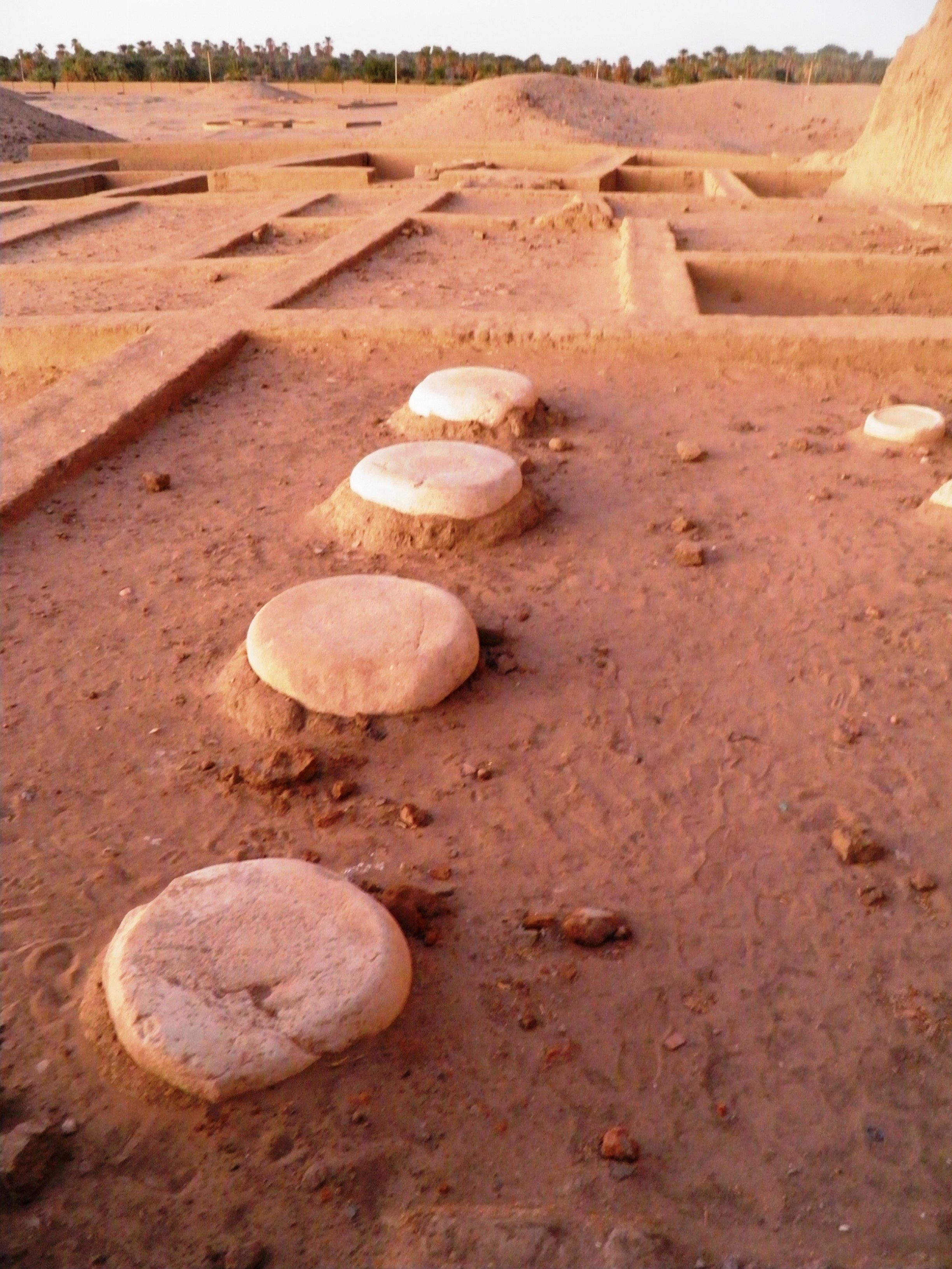
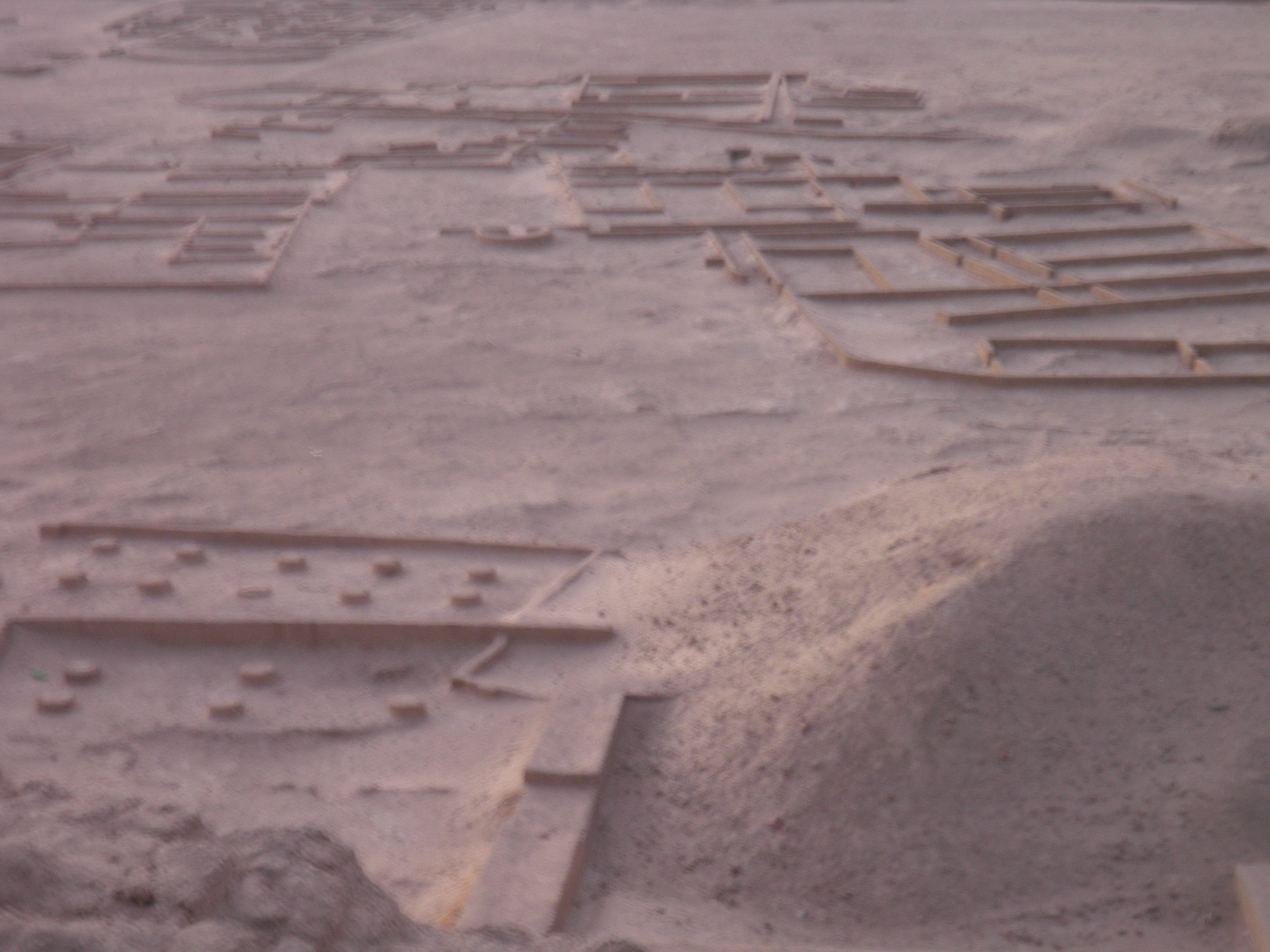
Tariq, Amir and I virtually sprint to the door, and run into the compound, a wide open space with what looks to be a large carved hill in the middle, with geometrically-patterned short mud walls throughout the area.

OLYMPUS DIGITAL CAMERA

Foundations and gravestones at Kerma

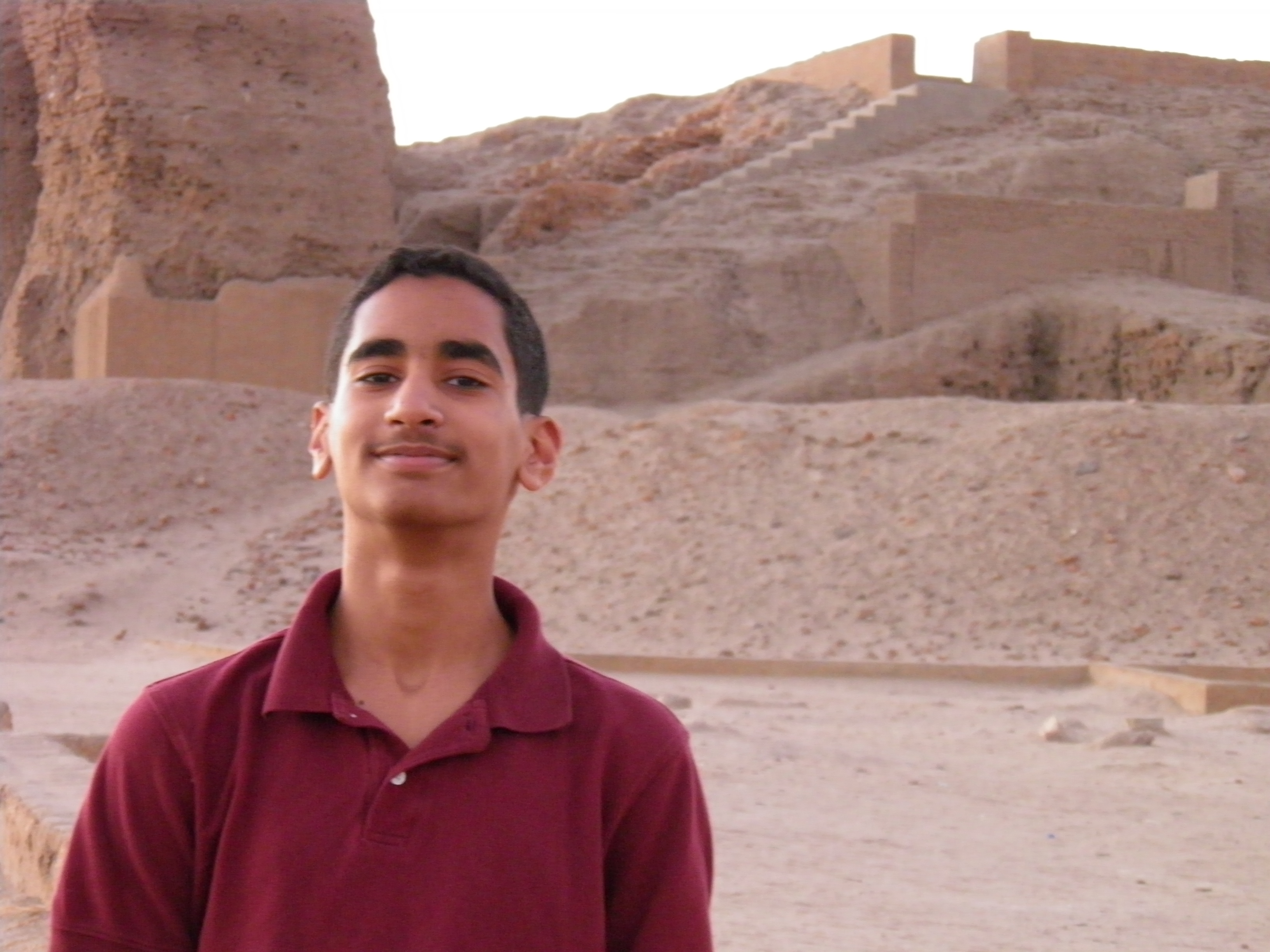
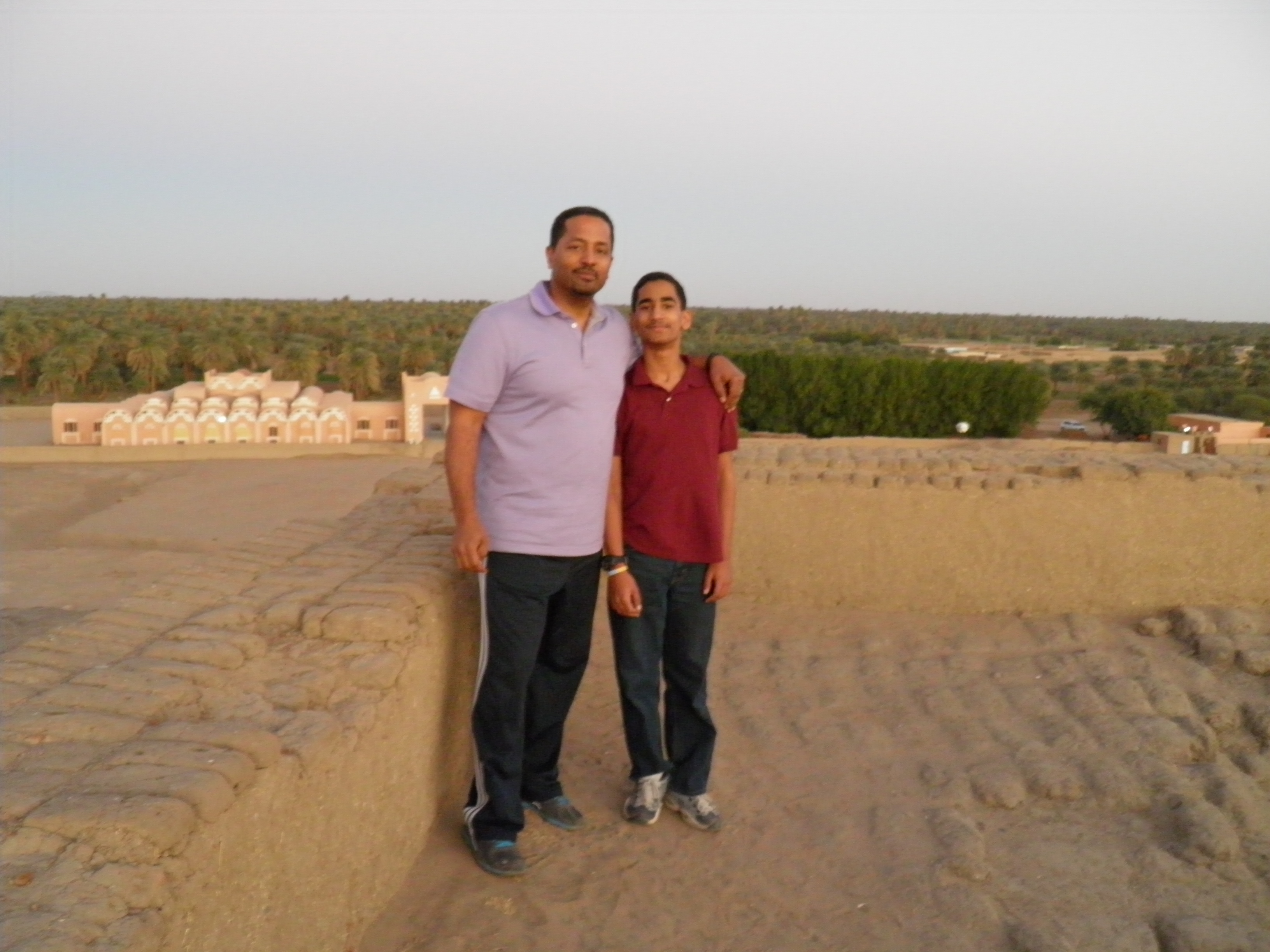
Kerma with TariqWe climb the Deffufa, or main temple, and from above the view is astonishing: everywhere we turn, we see the outlines of the complex city that existed nearly 5,000 years earlier.  It was organized hierarchically by a government that enforced urban zones including a religious sector with temples to worship deceased kings, royal residences, defense systems, and sectors for work, government and residence.

By 1750 BC, the kings of Kerma were powerful enough to organize the labor for monumental walls and structures of mud brick on which we stand today. They also had rich tombs with possessions for the afterlife; furniture, perfumes, pottery and food.  On the death of a king hundreds of cows, and possibly some humans as well, were sacrificed to accompany the king on his journey.

OLYMPUS DIGITAL CAMERA

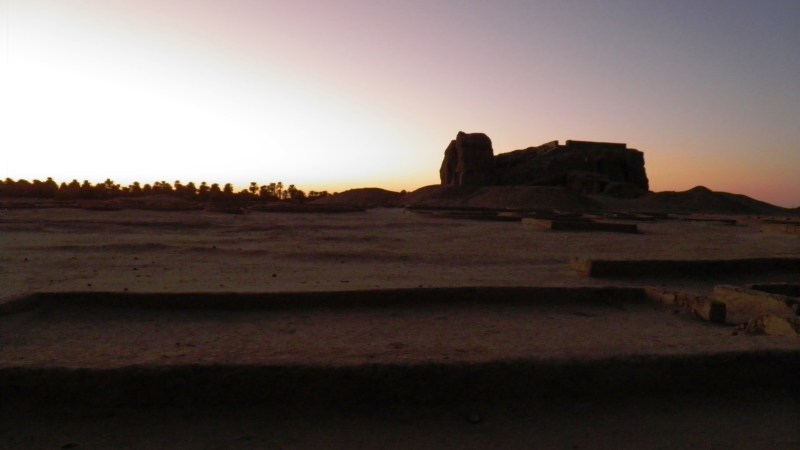
The sun begins to set, and we imagine what life might have been like in 2,400 BC from this site, looking down not on ruins but on a thriving royal city.  Thrilled and grateful for the experience, we return to the vehicle to resume our journey.

It quickly gets dark, and we our pace slows for our safety.

Near midnight, the sign for Wadi Halfa appears.

We have finally arrived.